

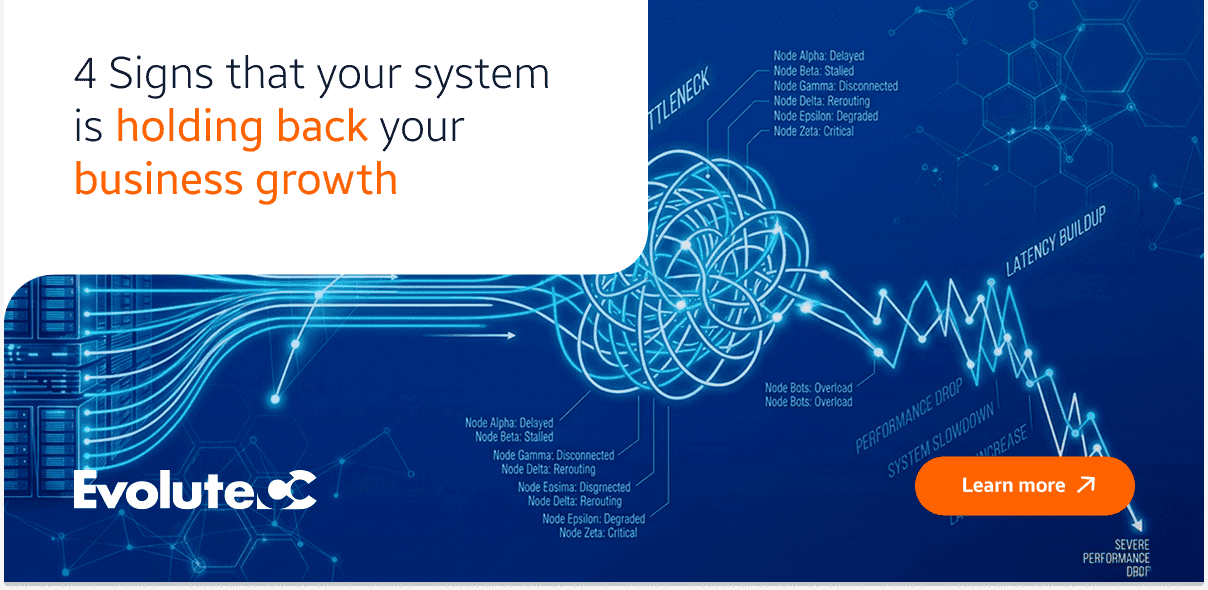
If it takes your company months to launch a new feature, integrate a tool, or respond to a market shift, you don’t have a technical problem—you have a competitive problem.
Today, technology doesn’t just support business; it defines its ability to grow. However, many organizations continue to operate on legacy systems that, far from driving innovation, act as a silent brake.
Application modernization isn’t about replacing old software with new software. It’s about aligning the technology architecture with the business’s strategic objectives, adopting a Cloud-First approach that allows for rapid scaling, adaptation, and competition.
According to multiple industry analyses, a large portion of the IT budget in traditional companies is allocated to maintenance rather than innovation. This imbalance not only limits growth but also increases operational risk over time.
When is it time to act? 4 strategic warning signs
The need to modernize is not subjective. It manifests itself in clear indicators within operations:
1. High maintenance costs
When most of the IT budget goes toward “keeping the lights on,” the problem is already structural.
Constant patches, outdated hardware, and systems that are difficult to maintain represent a growing technical debt that does not generate value.
2. Low adaptability
If implementing new functionality, integrating a payment gateway, or launching a mobile app takes months, the architecture is limiting the strategy.
Software should be a business enabler, not an obstacle.
3. Scalability limitations
Rigid infrastructures do not respond well to spikes in demand.
This results in system outages, slowness, and direct loss of revenue.
The inability to scale elastically is a critical sign that the architecture needs to evolve.
4. Data silos and lack of integration
When systems don’t communicate with each other, information becomes fragmented.
This prevents the use of real-time analytics or artificial intelligence models.
Without integration, there are no agile decisions.
Benefits of a Modern Architecture
Updates Without Disrupting Operations
Every application has a lifecycle. A container-based architecture allows you to update components independently, without shutting down the system. This not only reduces security vulnerabilities; it ensures that your product remains competitive, functional, and compliant with industry standards over time.
Superior security and reliability
Cloud platforms offer advanced security capabilities and continuous updates. They also enable the design of resilient systems capable of automatically recovering from failures.
Agility in the face of business changes
The cloud allows you to scale resources on demand. This optimizes costs and eliminates the need to invest in infrastructure that isn’t always used.
Modernization without losing what already works
Modernizing doesn’t mean throwing everything away. Through re-architecting, proven business logic is preserved while the architecture is redesigned to scale, integrate, and operate natively in the cloud. It’s not starting from scratch: it’s building on what works, but preparing for what’s to come.
The right approach is to modernize without disrupting operations
The most common mistake is to believe that modernizing means shutting down operations to rebuild everything from scratch.
In reality, the most effective processes are implemented progressively. At EvolutecC, we take an incremental approach, without halting your operations. Focusing on measurable returns, we assess the impact, identify the applications causing the most friction, and prioritize those with the highest return on investment.
In this way, we build new capabilities in the cloud while gradually migrating critical functions, reducing operational risk and establishing controls for cost, security, and performance to ensure that the new architecture remains efficient over time.
Conclusion
Technology infrastructure should be the engine of growth, not its limitation.
Organizations that modernize their applications not only optimize their operating costs but also regain the ability to innovate, scale, and compete in increasingly demanding markets.
Ignoring these signs does not stop the problem: it makes it more costly.
Is your system holding back your growth?
If you recognize one or more of these signs in your organization, the next step isn’t to make hasty decisions, but to understand the real impact on your operations.
A technical assessment can help you identify:
- Which systems are causing the most friction
- What opportunities for optimization exist
- How to prioritize modernization with a clear return on investment
Schedule a free technical assessment and find out what’s holding back your growth now! 🚀